Olson Kundig: Modern Polynesian Architecture in Hawaii
In the world of luxury design, true sophistication is often found where high-performance engineering meets the raw, unyielding beauty of the natural world. Olson Kundig’s latest evolution of their Hawaii Residence is a testament to this, offering a masterclass in Modern Polynesian Architecture that feels less like a traditional home and more like a precision-engineered coastal sanctuary.
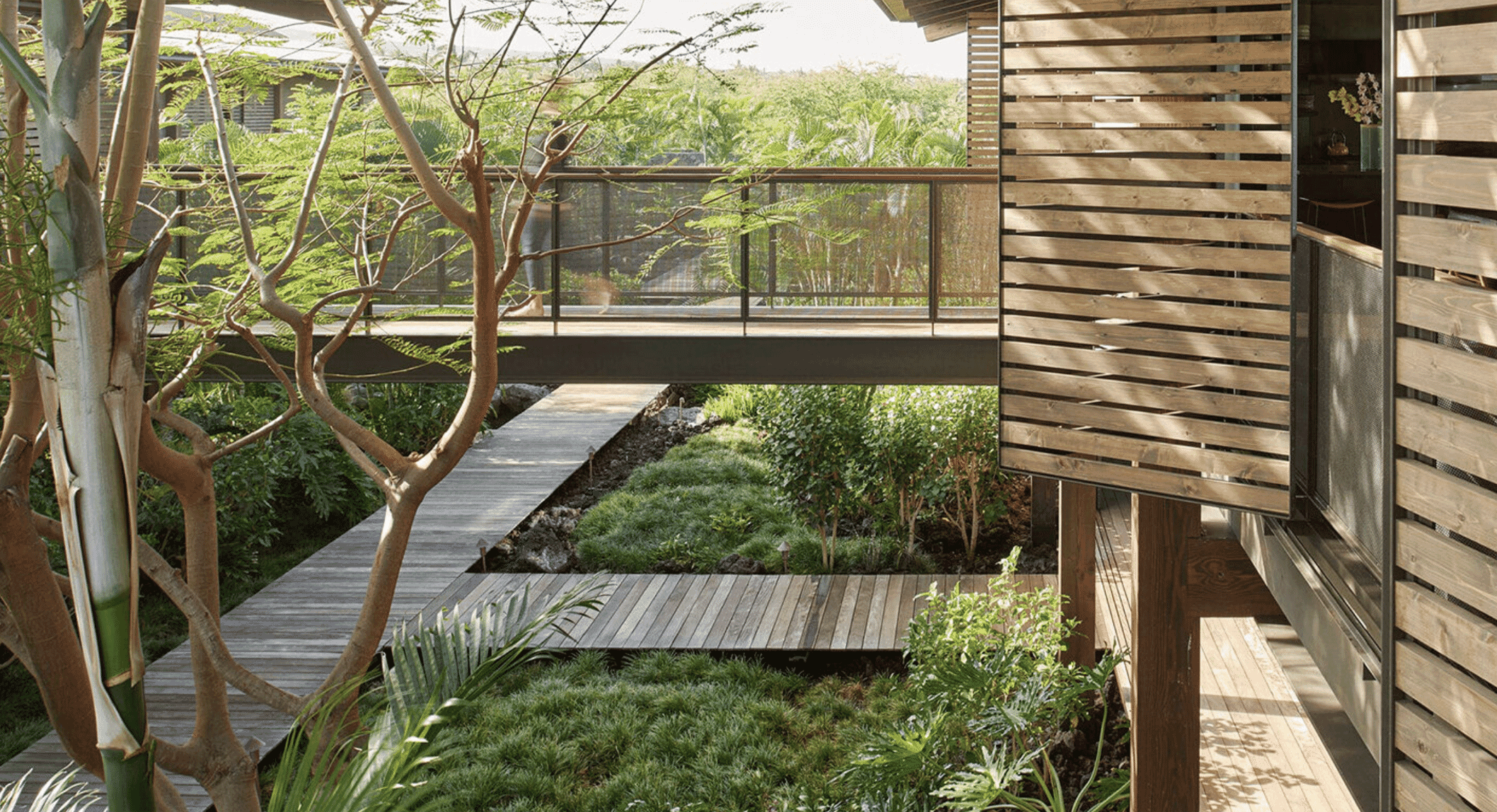
The 2024 expansion of this iconic residence marks a significant shift toward a luxury pavilion style architecture. Rather than imposing a singular, monolithic structure upon the land, Tom Kundig has curated a series of modular pavilions that sit lightly upon the jagged volcanic site. By understanding the benefits of elevated living spaces in tropical coastal design, the architecture allows the island’s natural topography—and its cooling breezes—to flow beneath and around the living quarters. This site-responsive architecture honors the Pacific island aesthetic while providing the ultimate luxury: a seamless dialogue between the inhabitant and the horizon.
The Office Hut: A Precision-Engineered Refuge
Central to this expansion is the "Office Hut," a standalone structure designed for those who view their workspace as a contemplative retreat. Tom Kundig often likens his kinetic designs to a Porsche 911—compact, high-performance, and meticulously detailed. This small detached office pod design inspired by Olson Kundig functions as a "refuge" within the "prospect" of the vast Hawaiian landscape.
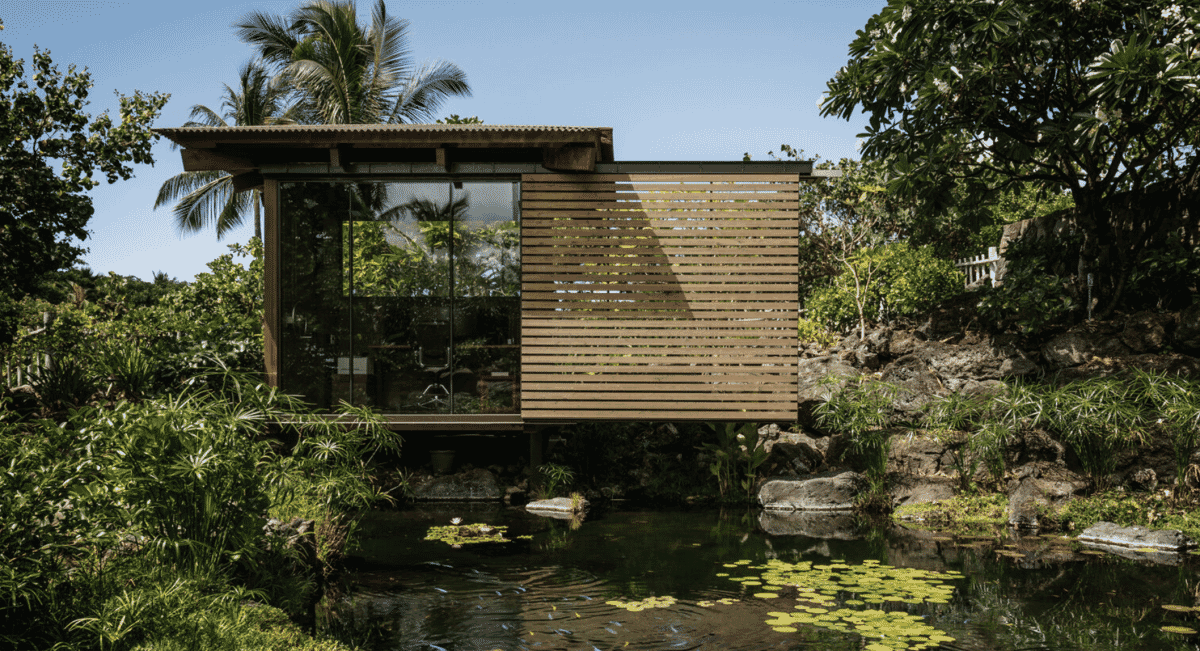
When considering how to design a modern Polynesian style home office, one must look beyond aesthetics to the timber frame construction and the psychological impact of the environment. This office hut serves as a coastal sanctuary, utilizing glass walls to provide a 360-degree immersion into the tropical greenery. It is an exercise in tropical indoor-outdoor living design, where the boundary between professional focus and natural serenity is intentionally blurred, allowing for a deep state of creative "flow."
Biophilic Workspace: Focus Over the Koi Pond
Inside, the narrative shifts from the architectural shell to a tactile, sensory experience. The interior design elements are rooted in biophilic design, utilizing organic textures and volcanic rock to anchor the workspace in its specific geographic context.
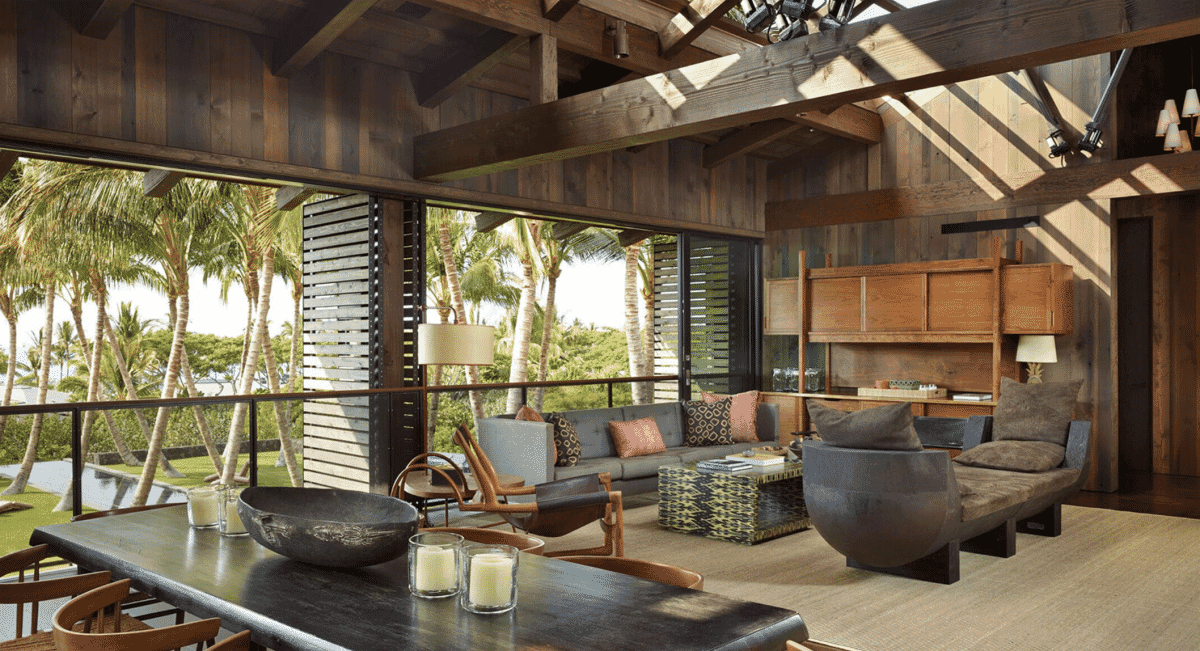
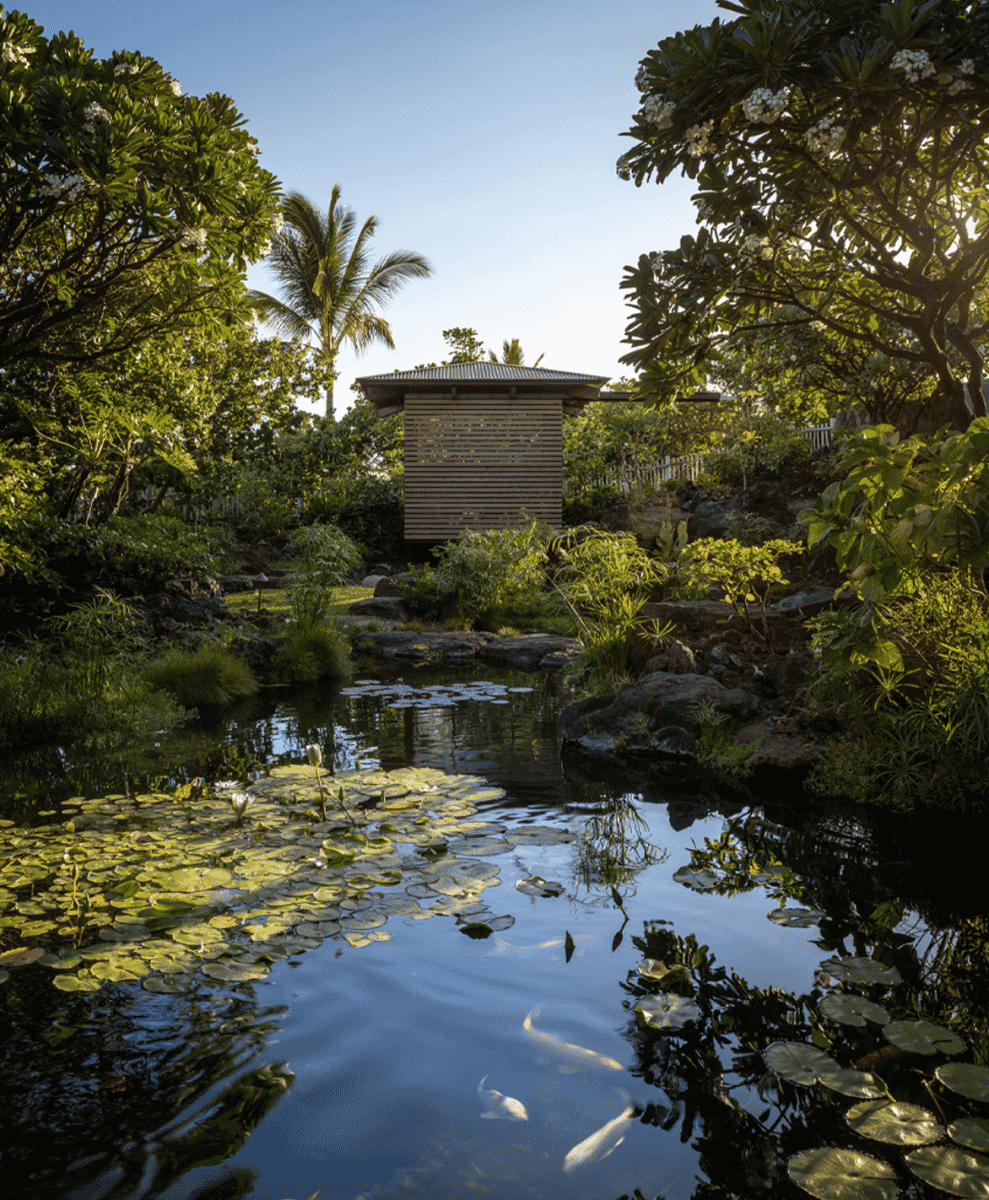
The most striking feature is the integration of water features; the office is positioned directly over a serene koi pond. Exposed wood beams provide a warm, rhythmic ceiling plane that mirrors the tranquility of the water below. By bringing the garden into the floor plan, the workspace eliminates the sterility of traditional modernism. You are not merely working in a room; you are suspended within a living ecosystem, where the movement of koi and the rustle of palms provide a natural soundtrack for deep focus.
Passive Climate Control: The Machine for Living
Perhaps the most sophisticated aspect of this Modern Polynesian Architecture is its rejection of mechanical intervention in favor of natural climate control in tropical design. The structures act as a "machine for living," utilizing passive cooling strategies that are as beautiful as they are functional.
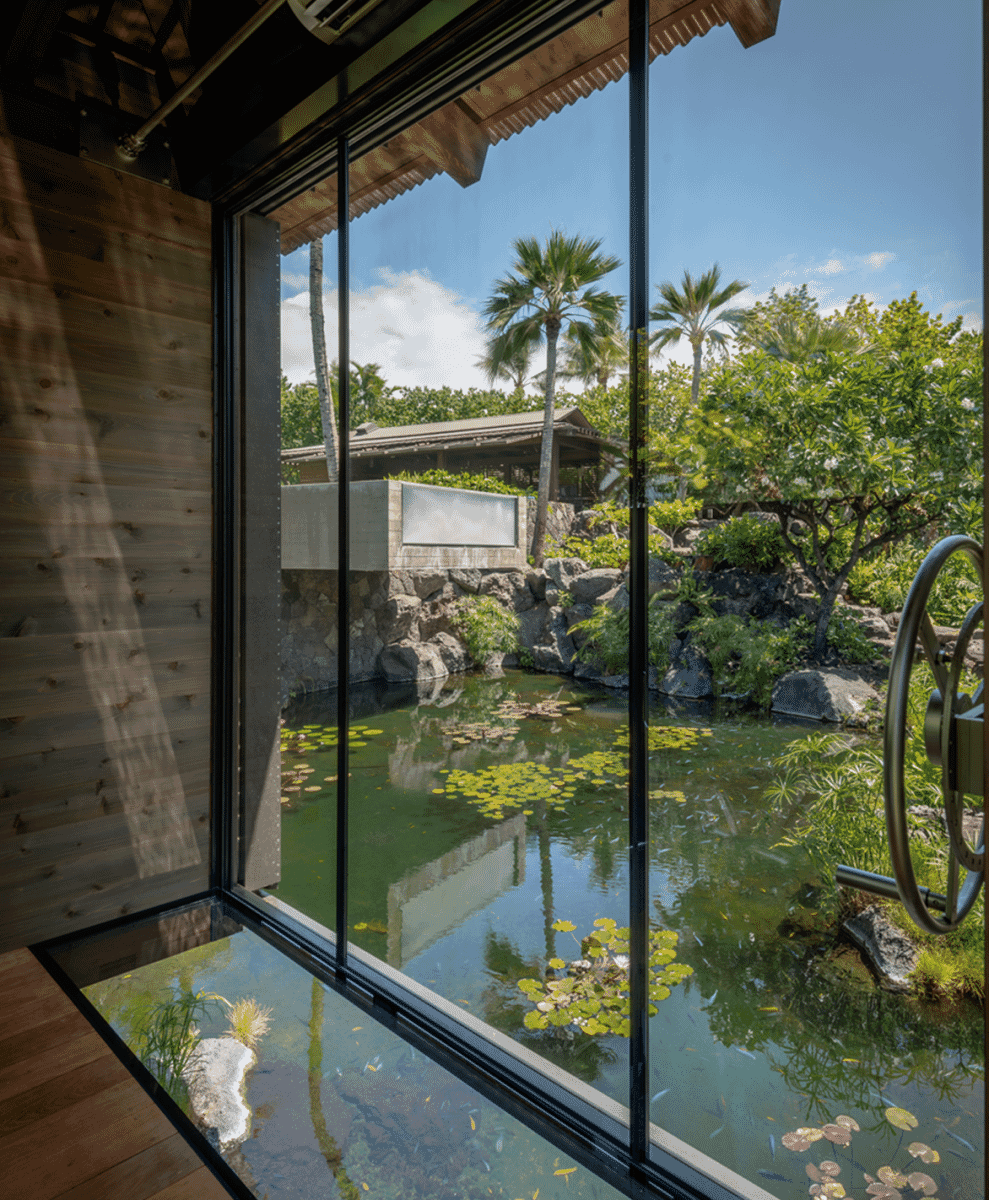
Technical precision is evident in the 6x15ft operable roof panels and the sophisticated shading systems. By using movable wood louvres for natural climate control, you can tune the environment to your exact comfort level, modulating sunlight and airflow with manual ease. Installing operable roof panels for tropical home ventilation ensures that hot air is purged upward, allowing the North Shore breezes to circulate freely. The use of cedar cladding further assists in this thermal regulation, providing a durable, breathable skin that ages gracefully in the salty Pacific air.
Site-Responsiveness: Rooted in Volcanic Stone
The final piece of the architectural puzzle is the material narrative. Olson Kundig has selected a palette that is both humble and luxurious: vertical cedar slats, copper accents, and locally sourced lava stone. The home is not a static object but a living part of the volcanic landscape.
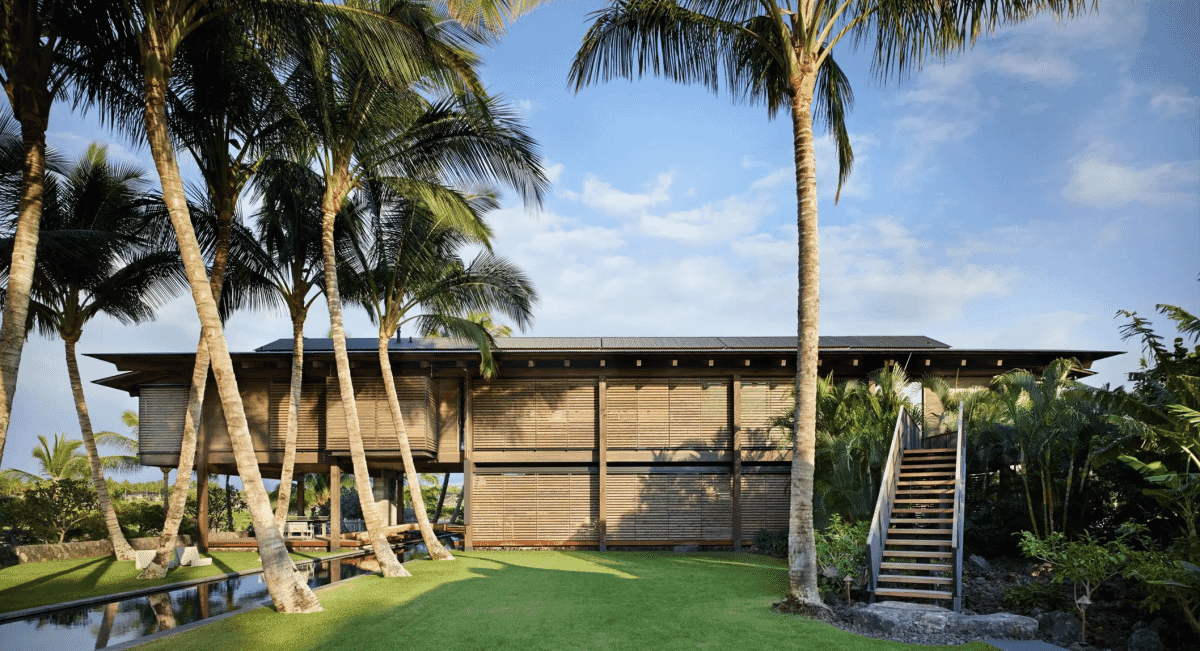
This connection is physically manifested through the expert execution of designing boardwalks and walkways between residential pavilions. These elevated paths act as bridges through the tropical garden, protecting the delicate ecosystem while guiding you toward the main residence. Inside, the transition is seamless, often incorporating lava stone in tropical indoor outdoor flooring to create a visual continuum between the earth and the interior. This is the essence of tropical modernism: a design language that respects the heritage of the land while utilizing cutting-edge engineering to elevate the human experience.
Ultimately, Olson Kundig’s Hawaii office stands as a masterpiece of Modern Polynesian Architecture. It is a precision-engineered refuge that proves true luxury lies in the ability to live—and work—in perfect harmony with the environment. This site-responsive architecture is not just a home; it is a sustainable, modular evolution of the classic Pacific island aesthetic.