The weather formula
Wear loose, lightweight, light-colored pieces with supportive breathable footwear and sun protection. Keep one very thin layer for air conditioning, but organize the day around shade, hydration and the coolest available times when heat becomes intense.
- Loose lightweight clothing helps manage heat.
- Sun protection belongs in the outfit plan.
- The itinerary may need adjustment, not just the wardrobe.
Use light, loose construction
Lightweight, loose-fitting clothes reduce trapped heat and allow movement. Linen blends, cotton voile and other breathable fabrics are usually more comfortable than thick denim or tightly fitted synthetics.
Light colors can also reduce absorbed sunlight. Make sure pale pieces remain opaque and comfortable when damp.
- Loose breathable top
- Airy bottom
- Minimal necessary layers
Treat sun protection as clothing
A brimmed hat, sunglasses and a light shoulder-covering shirt can reduce exposure during long outdoor periods. Choose pieces you will actually keep on, not props that live in the bag.
Heat safety may require slower plans, shade and indoor breaks. Clothing cannot compensate for an unsafe itinerary.
Keep interiors from causing overpacking
One thin overshirt or cardigan handles strong air conditioning. It should work with every base and fold very small.
Avoid packing a blazer, jacket and cardigan for the same hypothetical indoor chill.
- One indoor layer
- Refillable water bottle
- Secure breathable footwear
Three outfit formulas
Hot city day
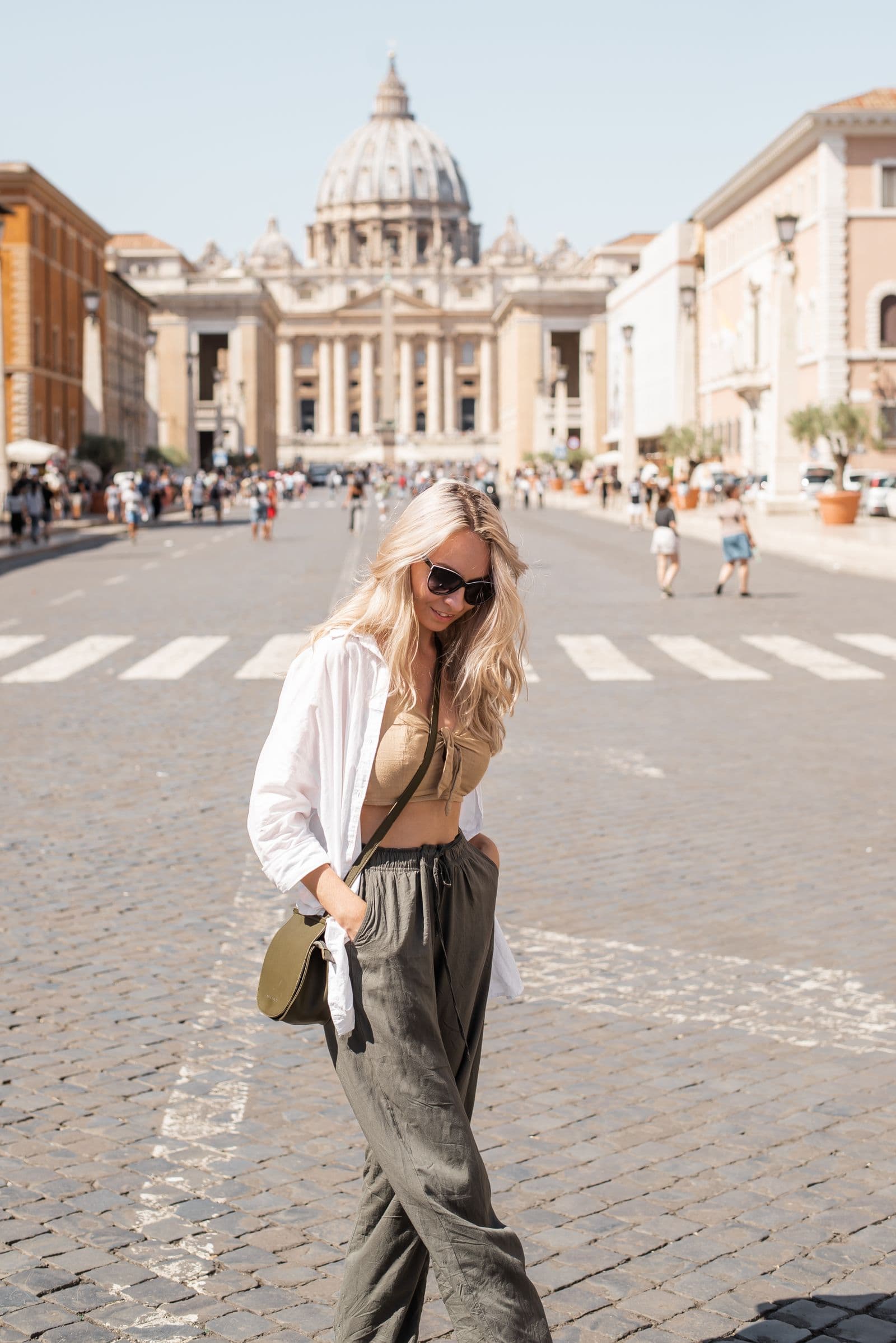
Linen shirt + wide-leg trousers + supportive sandalsLoose, covered and breathable.
Museum day
Cotton midi dress + overshirt + sneakersBalances outdoor heat and indoor cooling.
Evening
Sleeveless midi + low sandals + thin cardiganLight with one compact temperature adjustment.
Adjust when the forecast moves
Keep the useful core stable and make the smallest functional change that answers the new condition.
| Situation | Change | Why |
|---|---|---|
| The forecast shifts before departure | move to a looser breathable base and keep one thin indoor layer in the day bag | A one-for-one change keeps the wardrobe compatible and the piece count stable. |
| The walking day becomes longer | Use hot city day as the base and choose the most supportive planned shoe. | Distance and surface are harder to improvise around than color or accessories. |
| Dinner or an event becomes smarter | Keep the daytime base where possible, then borrow the polish level from museum day. | A small switch avoids carrying a separate evening wardrobe. |
| The bag is over its limit | Remove heavy denim, untested light fabrics or a jacket packed only for appearance first. | Low-use duplication creates weight without solving a confirmed need. |
Practical packing list
Give every item a confirmed job. The notes below check function and repeat value against the trip.
Use it with more than one bottom and check that it remains comfortable under the main layer.
Build at least two outfits around this base and confirm the hem works with the chosen shoes.
Style it for at least two plans and confirm that the length, coverage and chosen shoe work together.
Use it with more than one bottom and check that it remains comfortable under the main layer.
Test it for the real walking surface and make sure it works with at least two planned outfits.
Test it for the real walking surface and make sure it works with at least two planned outfits.
Keep this only when the forecast or outfit plan gives it a clear, repeatable job.
Keep this only when the forecast or outfit plan gives it a clear, repeatable job.
Give refillable bottle a named day or practical role in the What to Wear in 25–30°C Weather plan before it enters the bag.
Give sun protection a named day or practical role in the What to Wear in 25–30°C Weather plan before it enters the bag.
Turn this guide into a day-by-day plan.
Use your exact dates, activities, luggage and weather instead of packing from a static list alone.
Common packing mistakes to avoid
Packing the backup before testing the main plan
A backup does not solve an incomplete What to Wear in 25–30°C Weather outfit. Try the main shoe, layer and bag together first. Add a substitute only when it covers a specific failure such as rain, delayed luggage or a documented venue rule.
Counting garments instead of complete outfits
A tidy item count can still hide missing socks, incompatible hems or an outer layer that will not close over the knit. Photograph each complete outfit and note the day beside it before the pieces go into the case.
Letting one special item create several more
Avoid heavy denim, untested light fabrics or a jacket packed only for appearance. A garment that needs its own shoe, bra, bag and coat consumes more space than its single-item count suggests. Keep it only when the confirmed itinerary justifies the whole chain.
Frequently asked questions
Should I avoid black clothing?
Light colors can reduce absorbed sunlight, but fabric weight, looseness and shade also matter. Use the pieces in which you can stay comfortable.
What if the forecast shows extreme heat?
Follow local alerts and adjust timing, exposure and activity. A wardrobe is not a substitute for heat-safety planning.
When should I finalize this packing plan?
Set the capsule about one week before departure, then make the final outer-layer and shoe decision 48 to 72 hours before travel. That window is close enough for a useful forecast while leaving time to wash, test and repack the chosen pieces.
What should I change when the forecast moves outside the expected range?
Keep the outfit formulas and change one functional layer at a time. For this guide, move to a looser breathable base and keep one thin indoor layer in the day bag. Rebuild the whole capsule only when the new conditions affect most days rather than one short period.
Sources and further reading
We used these sources to check the practical guidance, then wrote and structured this guide independently. Always verify live weather, host instructions and venue rules close to departure.